University of Science and Culture: A Pioneer in Research and Technology
Introduction of University of Science and Culture
The University of Science and Culture (USC) is one of Iran’s leading higher education institutions, focusing specifically on research and technology. The USC has established a reputable position among universities in Iran. By leveraging advanced infrastructure and skilled human resources, utilizing the National Park of Soft Sciences and Cultural Industries and the Academic Center for Education, Culture, and Research (ACECR) capabilities, it provides a suitable environment for nurturing talents and conducting research projects. The primary goal of USC is to strengthen the link between academia and industry, promote innovation and entrepreneurship, and create a conducive environment for the development of modern technologies.
As the largest and best private university in the country, USC owes its success to the efforts of its members. The university’s distinguished faculty, its ranking in international evaluations, the existence of seven journals accredited by the Ministry of Science, Research, and Technology, 44 published books from the university press, and hosting of over 45 national and international conferences and 54 research projects, alongside achieving top student rankings at national and international events, are just a glimpse of the university’s research capabilities.
As the leading non-governmental university in Iran, the USC operates under the supervision of the Ministry of Science, Research, and Technology. Collaboration with prominent scientific centers of ACECR, such as the Royan Research Institute, Avicenna Research Institute, and the Medicinal Plants Research Center, as well as offering specialized joint courses, are among the university’s outstanding advantages on its path toward scientific and technological advancement.
Faculties
The University of Science and Culture has several specialized faculties, each operating independently and specializing in various scientific and research fields. These faculties include:
1. Faculty of Engineering
This faculty includes various fields such as Electrical Engineering, Mechanical Engineering, Industrial Engineering, Civil Engineering, Computer Engineering, Statistics, and Safety Engineering. The Faculty of Engineering, with distinguished faculty members and advanced equipment, engages in various engineering domains and can execute research projects in artificial intelligence, computer networks, power systems, applied mechanics, and industrial engineering. This faculty prepares students for the job market by offering specialized courses and workshops.
2. Faculty of Humanities
The faculty of humanities engages in various human and social sciences fields, such as Psychology, Financial Management, Industrial Management and Business, Accounting, Business Management, and Economics. With experienced professors and suitable educational facilities, this faculty aims to familiarize students with the latest theories and research methods in the field of humanities. The Faculty of Humanities provides a suitable environment for research in various fields through seminars, conferences, and specialized training courses.
3. Faculty of Art and Architecture
The faculty of art and architecture operates in various fields of art and architecture with the help of experienced faculty and advanced facilities. This faculty includes programs like Architecture, Fabric and Clothing Design, Painting, Graphic Design, and Art Research. The Faculty of Art and Architecture prepares students for the job market by organizing specialized courses and workshops. This faculty collaborates with prominent artists and architects, creating numerous opportunities for artistic and architectural projects nationwide.
4. Faculty of Tourism
The faculty of tourism focuses on education and research in various tourism and tourism management areas. With experienced professors and appropriate educational facilities, this faculty strives to introduce students to the principles and techniques of the tourism industry. The Faculty of Tourism is the first faculty in Iran and is recognized as a scientific hub for tourism.
5. Faculty of Biological Sciences
The faculty of biological sciences operates in various fields, such as Biotechnology, Genetics, Microbiology, and Biochemistry. Equipped with advanced facilities and experienced faculty, this faculty provides a suitable environment for conducting applied and innovative research in biological sciences. The faculty of biological sciences prepares students for the job market and scientific research through specialized courses and workshops. It was established in collaboration with Royan and Ibn Sina Research Institutes, where practical and laboratory courses are held.
6. Faculty of Law
The faculty of law focuses on education and research in various legal fields, such as Private Law, Public Law, International Law, and Criminal Law. Utilizing distinguished professors and suitable educational facilities. This faculty aims to introduce students to legal principles and foundations. The Faculty of Law prepares students for the job market in law and advocacy through specialized courses and workshops.
Research Capabilities and Facilities
The University of Science and Culture, with numerous research centers and equipped laboratories, provides a suitable environment for conducting research projects in various scientific fields. Considering the country’s industrial and technological needs, the USC can offer research and consulting services to multiple industries. Furthermore, the university conducts workshops and specialized courses to familiarize students and researchers with the latest scientific and technological advancements.
1. Memorandum of Understanding
To foster collaborations and scientific diplomacy, one of the missions of the University of Science and Culture is to establish memorandum of understanding (MOU) with industries, research institutes, and other research organizations. More than 50 MOUs have been signed with companies and research centers.
2. Specialized Laboratories and Workshops
Conducting research and projects requires appropriate laboratory equipment and space. The University of Science and Culture, with 19 specialized laboratories and educational workshops, can significantly assist researchers.
3. International Agreements and Contracts
The international agreements and contracts of the University of Science and Culture are critical tools for expanding and strengthening scientific and research collaborations with reputable universities and research centers worldwide. These agreements are made in various fields and are crucial in enhancing the university’s scientific and research standing. The goals of international agreements include developing research collaborations, increasing the publication of scientific articles, launching joint research projects, hosting joint international workshops and conferences, enhancing student and faculty exchange programs, and improving the university’s international credibility and ranking. We aim to transform the University of Science and Culture into an international scientific hub where researchers and students worldwide can collaborate and contribute to advancing science and technology. A joint international research contract was recently established between the University of Science and Culture and UCSI University in Malaysia.
International MOUs with Global Universities
· Mälardalen University in Sweden
· University Canada West in Canada
· IMC University in Austria
· Brunel University West London in the UK
· UPM, USM, and UCSI universities in Malaysia
· European University in Armenia
· Khazar University in Azerbaijan
· Nishantasi, Aydin Istanbul, and Istinye universities in Turkey
· Collaboration agreement with the Austrian Cultural Embassy
· Collaboration agreement with the COMSTECH Inter-Islamic Network on Virtual Universities
· Collaboration agreement with the Academy of Sciences of Afghanistan
· Collaboration agreement with the Dehkhoda Institute
4. Support for Postdoctoral Researchers
Postdoctoral researchers are crucial for any university’s scientific and research development, and the University of Science and Culture places particular importance on this group. Typically, these individuals engage in higher-level research activities after completing their PhDs. They significantly advance research projects, develop knowledge, and transfer experiences to students and colleagues. The support programs for postdoctoral researchers at the University of Science and Culture include budget allocations and financial support, access to research facilities and resources, strengthening connections with industry and the community, assistance in publishing articles and research findings, professional skill development through workshops, seminars, and specialized meetings, and opportunities for collaboration and participation in international projects.
5. Research Capabilities of Faculty Members
One of the key distinguishing features of the University of Science and Culture is its utilization of capable faculty members who possess a high scientific standing in their specialized fields and are well-recognized in domestic and international communities. Among more than 130 faculty members and over 700 invited professors, five faculty members rank in the top one and two percent of the most cited researchers globally, with numerous research activities in their professional records.
6. Scientific Publications
The University of Science and Culture currently has six scientific and research journals authorized by the Ministry of Science, Research and Technology, ranked among the top in various fields. These journals are where interested researchers can publish their research articles after the review process. You can visit the University of Science and Culture journal websites for more information.
List of USC’s Scientific Journals:
1. Modern Technologies Law
2. Tourism and Leisure Time Journal
3. Journal of Interdisciplinary Studies in Iranian Architecture
4. International Journal of Tourism, Culture, & Spirituality
5. Resilient Construction and Design
6. International Journal of Web Research
7. Research in Sports Physiology and Management
7. National Park of Soft Sciences and Cultural Industries
The National Park of Soft Sciences and Cultural Industries, in collaboration with the Vice Presidency for Science and Technology and under the supervision of the Ministry of Science, Research and Technology, is the first and most specialized park in the field of cultural economy. It provides a suitable environment for establishing, developing, and flourishing institutions and companies. The technological companies located in this park engage in innovative activities in various cultural and artistic fields through constructive interaction with universities and other research and technology institutions.
8. Business Development Foundation and Specialized Training Center
The Business Development Foundation of the University of Science and Culture was established to create an environment and infrastructure for entrepreneurship and develop student-centered initiatives. Its main goal is facilitating internships and practical training and establishing business initiatives involving students and faculty from various disciplines. These initiatives can mature into creative and knowledge-based companies in the National Park of Soft Sciences and Cultural Industries. The Specialized Training Center at USC, operating under the Business Development Foundation, is dedicated to creating employment opportunities, entrepreneurship, and enhancing human resource skills, focusing on developing specialized and skilled personnel. For more information, please refer to the link below.
Research and Technology Approach
With a comprehensive approach to research and technology, the University of Science and Culture strives to address the scientific and industrial needs of the country. By executing joint research projects with various industries, the USC enables the utilization of research results for industry applications. The University of Science and Culture also conducts specialized courses and workshops to familiarize students and researchers with the latest scientific and technological advancements.
Research Contracts and Collaborations with Industries
The University of Science and Culture is ready to collaborate with various industries in research and technology to strengthen the relationship between academia and industry. With its scientific and research capacities, the USC can execute joint research projects and provide industry consulting services. Moreover, by organizing specialized courses and workshops, the university offers a suitable environment for enhancing industry personnel’s scientific and professional level.
In light of the increasing demands of industry and society for modern knowledge and technologies, USC continually seeks to play an influential role in the economic and social development of the country by providing practical and innovative solutions. The USC has established itself as a research and technology hub by signing various contracts with industries and developing a network of relationships with domestic and international companies. This benefits USC and contributes significantly to the growth and advancement of the country’s scientific and technological landscape.
Holding Specialized Courses, Training Workshops, and National and International Conferences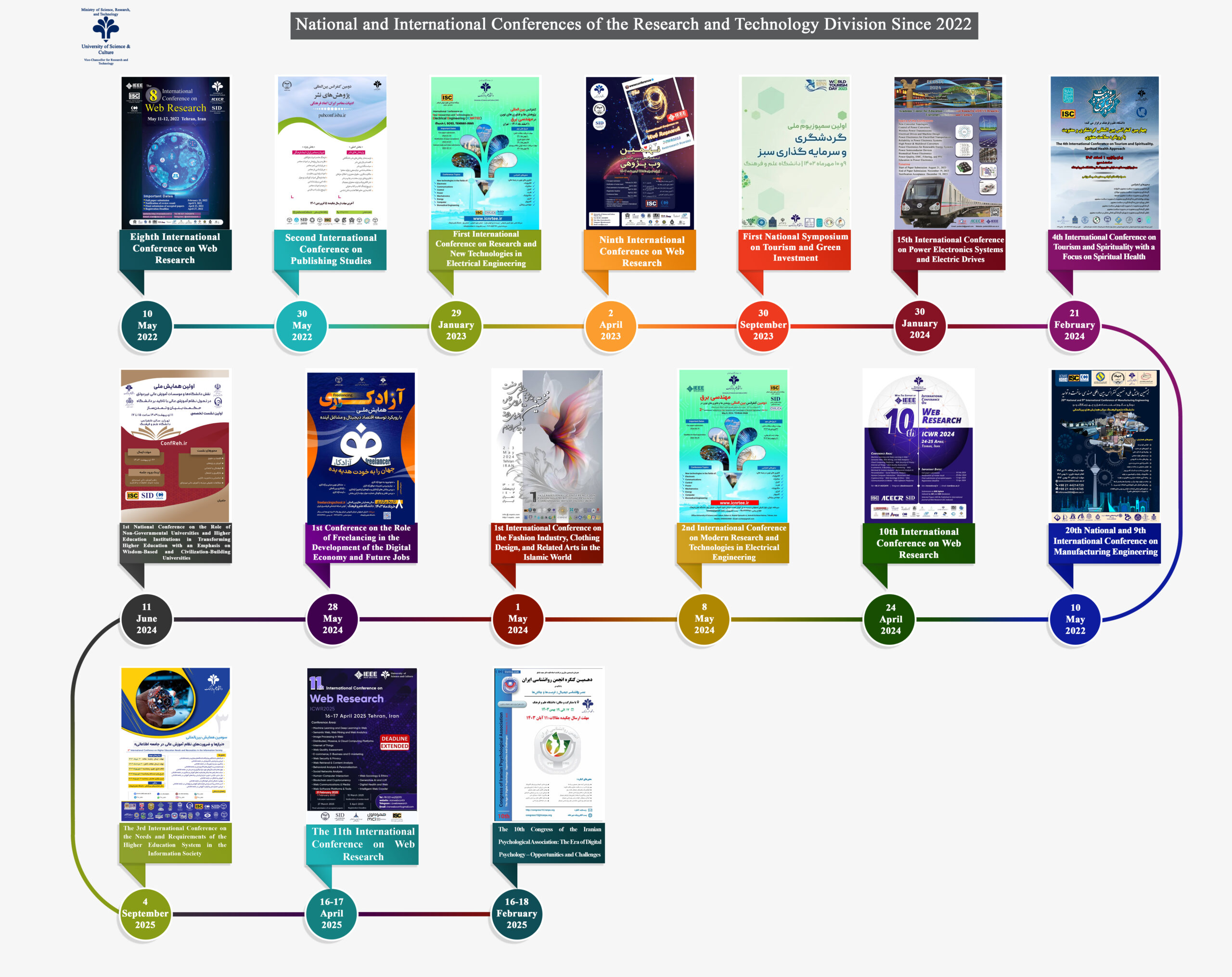
By organizing specialized courses and training workshops, the University of Science and Culture aims to familiarize students and researchers with the latest scientific and technological achievements. These courses and workshops cover various fields of science and technology, including Electrical and Computer Engineering, Mechanical and Industrial Engineering, Basic Sciences, Humanities and Social Sciences, Arts and Architecture, Tourism, Modern Biological Sciences and Technologies, and Law.
The university held over 130 specialized sessions in the second half of 2023, facilitated by faculty members, invited speakers, and industry and community experts. Additionally, it has organized more than 50 national and international conferences, reflecting the university’s dynamic and ongoing engagement in scientific and research domains. This number of specialized sessions and conferences underscores the university’s commitment to knowledge development, experience exchange, and fostering a space for dialogue between academia and industry.
For more information and to take advantage of these opportunities, contact the Office of Research and Technology on the third floor of the Farhang Building, call +982144252060, or email research@usc.ac.ir.